

When the wind changes
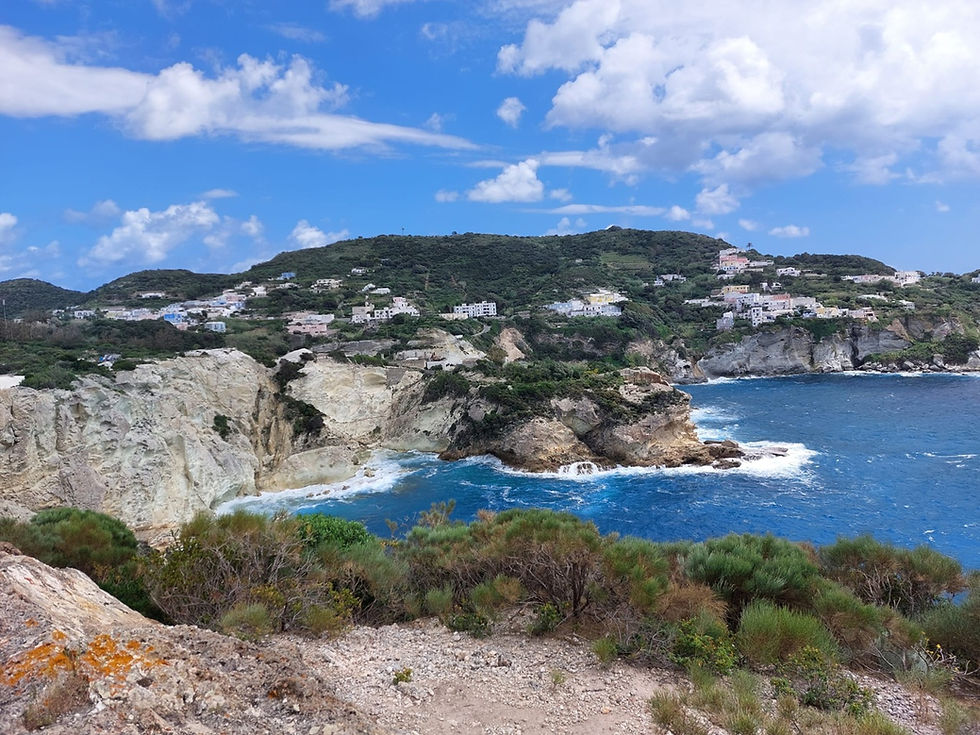
After one of the most exceptional migration peaks of recent decades, the second week of May on Ponza brought a gradual but evident change in pace, strongly influenced by weather conditions. While the beginning of the period still produced very high numbers of migrants, the arrival of persistent westerly winds progressively slowed migration across the central Tyrrhenian Sea.
The first days remained remarkably busy. Stable but cloudy conditions, with mild temperatures and little wind, still resulted in days of 900 or more birds ringed, once again dominated by garden warbler (Sylvia borin) and icterine warbler (Hippolais icterina). Numbers were at times so high that several nets had to be temporarily closed to allow the team to safely process the birds. Despite the overwhelming abundance of the dominant species, migration diversity remained impressive, with species such as rock thrush (Monticola saxatilis), bee-eater (Merops apiaster), spotted flycatcher (Muscicapa striata) and cuckoo (Cuculus canorus) continuing to appear regularly.
By the 9th of May, another thousand birds had been ringed over just two days, confirming the exceptional nature of this spring season. However, the expected weather deterioration soon arrived and migration quickly responded. On Ponza, a shift to strong west winds almost always means a sharp reduction in migratory activity, as birds avoid crossing the central Tyrrhenian under unfavourable conditions.
Indeed, from the 10th of May onwards, numbers dropped dramatically for the first time in nearly a month, with some days yielding fewer than 100 birds and eventually only a few dozen individuals. Nevertheless, even during quieter periods, Ponza continued to offer remarkable observations and valuable scientific data.
Among the most interesting records was the retrap of a spotted flycatcher (Muscicapa striata) originally ringed on the island in May 2025 and recaptured again in May 2026, most likely a breeding individual belonging to the darker tyrrhenica subspecies typical of the Tyrrhenian islands.

Another notable retrap involved a male house sparrow (Passer domesticus) first ringed in 2019 and recaptured this spring, meaning the bird is now at least seven years old and still in excellent condition.

Despite the overall slowdown in migration, surprises never stopped. During one windy afternoon closure round, the station captured only the fourth European roller (Coracias garrulus) ever recorded during the project, following previous captures in 2002, 2004 and 2022. Even with very low numbers of migrants, rare and spectacular species can still appear unexpectedly on Ponza.

The persistence of strong westerly winds eventually culminated in a real storm, with gusts reaching up to 75 km/h and forcing a complete closure of the nets. Nevertheless, fieldwork continued whenever conditions allowed, and even in these difficult days some beautiful species were still observed, including two different forms of subalpine warbler: a western (Iberian) subalpine warbler (Curruca iberiae) and a Moltoni’s warbler (Curruca subalpina), both adult males.

Overall, this period perfectly illustrates the strong relationship between weather and migration dynamics on Ponza. After weeks of exceptional intensity, the season temporarily slowed under persistent west winds, yet continued to provide fascinating records and unforgettable moments, reminding us that even on the quietest migration days, surprises are always possible on the island.


Stavo cercando una piattaforma da inserire nel mio confronto tra diverse soluzioni di betting e sono partito dalla varietà degli eventi sportivi. La cosa che mi interessava maggiormente era trovare mercati differenti e una modalità che permettesse di seguirli anche durante gli incontri. https://betflag.rest/ La presenza del live betting mi ha quindi portato a esaminare meglio l'offerta. Oltre allo sport sono disponibili anche slot e live casino, che permettono di cambiare categoria quando si cerca un tipo di intrattenimento diverso. Nel contesto italiano trovo utile poter consultare calcio, tennis, basket e altri eventi nello stesso ambiente. Personalmente preferisco valutare prima l'insieme della proposta e poi concentrarmi sulle discipline che seguo più spesso, invece di scegliere una piattaforma basandomi su un solo…